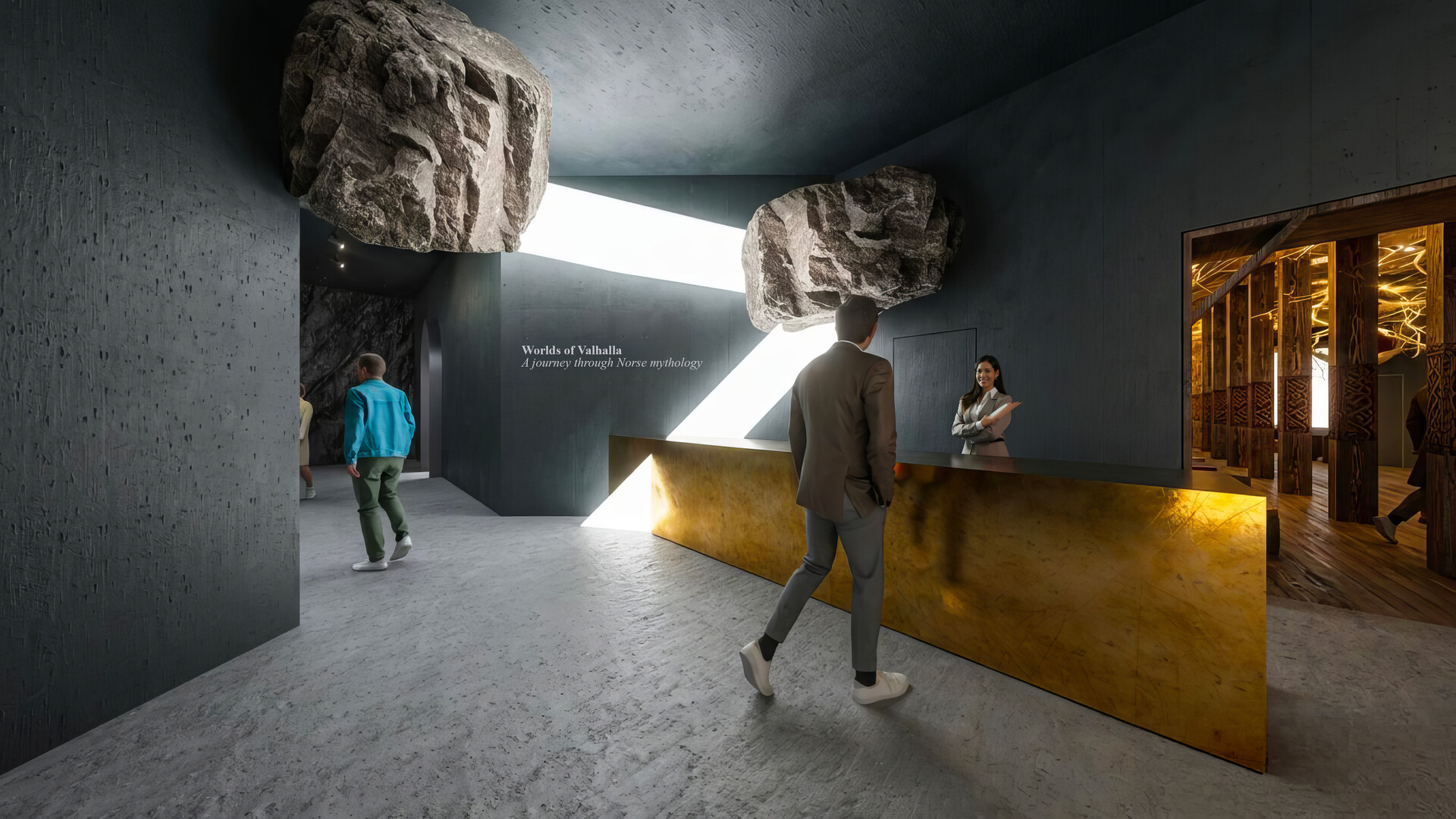
Worlds of Valhalla
Reykjavik, Iceland
Norse mythology is deeply rooted in Iceland through the Eddas, Iceland's most significant contribution to world literature. The mythology behind the sagas has long remained in the background of the island's tourism landscape, but Worlds of Valhalla sets out to change that.
The project is a 1225 m² immersive experience in which visitors travel through the mythological worlds of the cosmic tree Yggdrasil guided by a Völva, the seeress who narrates the Völuspá in the original Eddas. It is not a museum, but a speculative, sensory interpretation of realms that were always meant to exceed the limits of what can be known.
The concept was developed by Aron Þór Leifsson, Gagarin and Tobia Zambotti in 2024 and is still in progress.
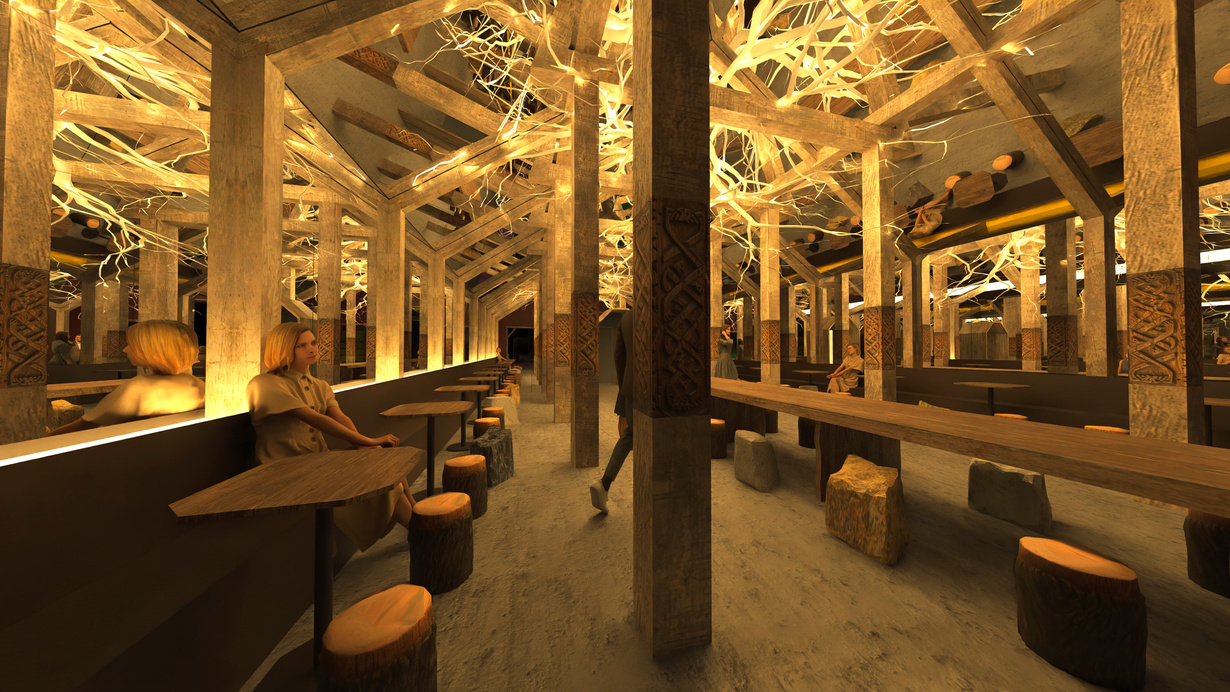
Visitors enter the Norse Mythology through Miðgarð, the realm in which the humans live. Functioning as a waiting area, it places them within the myth before the journey begins. Yggdrasil’s roots pierce the ceiling, their forms multiplied in mirror-clad walls, introducing the disorienting nature of the world tree.
Walking along Yggdrasil
The concept at the heart of the project is deceptively simple: the visitor walks the world tree, Yggdrasil. The roots and branches of this cosmic ash connect all realms and become the organizing principle of the entire space. White bark-clad corridors link each world, acting as sensory cleansers between radically different atmospheres. By the time visitors cross Bifröst and step back into the present, the structure reveals itself: the path they walked was the tree itself.
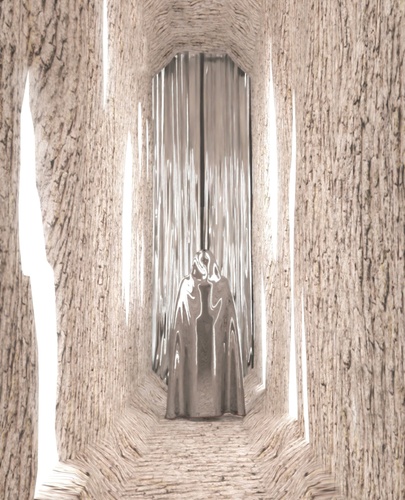
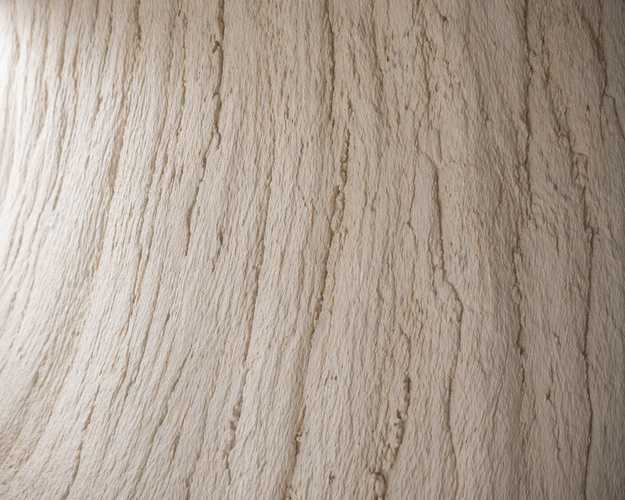

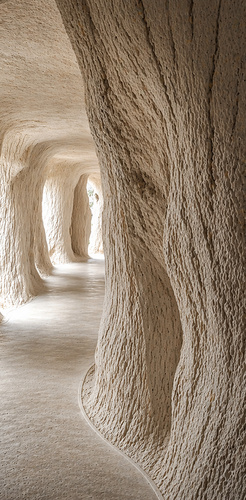
The bark of Yggdrasil is cladded with white clay
The incomplete and inconsistent nature of the Eddas allows for speculative reinterpretations of these mythological realms.
The Eddas were written down centuries after the religion was practiced, making them speculative by nature. They are a single perspective on a faith that was largely oral, widely dispersed, and never fully captured in writing. Though inconsistencies are plentiful, so too are vivid, distinct atmospheres: the cold toxicity of Niflheim, the golden grandeur of Ásgarð, the subterranean darkness of Niðavellir. Rather than treating these gaps as problems, the project treats them as material. Artistic freedom and academic grounding are intentionally balanced against one another: each realm adheres to what little is known, while everything beyond that threshold is invented with care.
Iceland as the setting
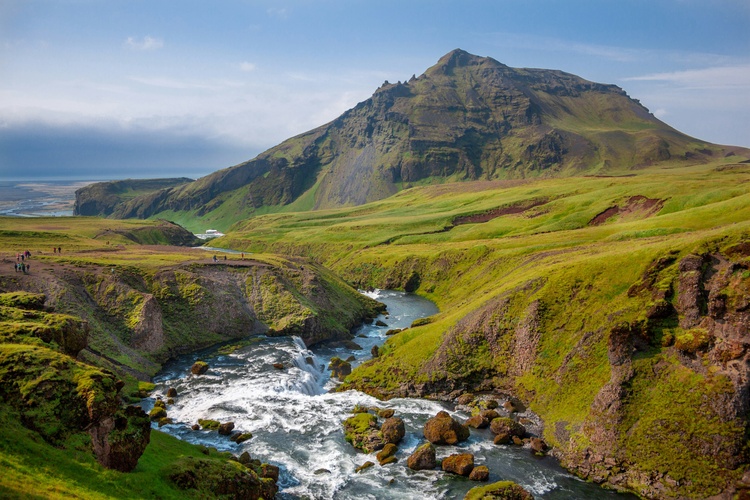
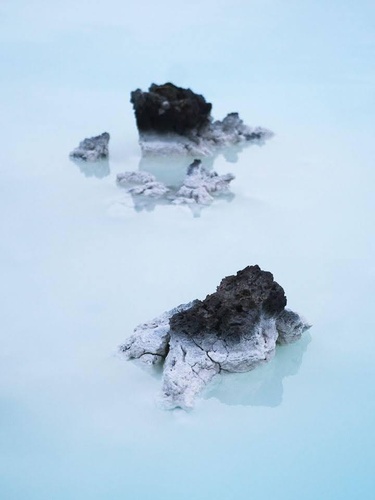
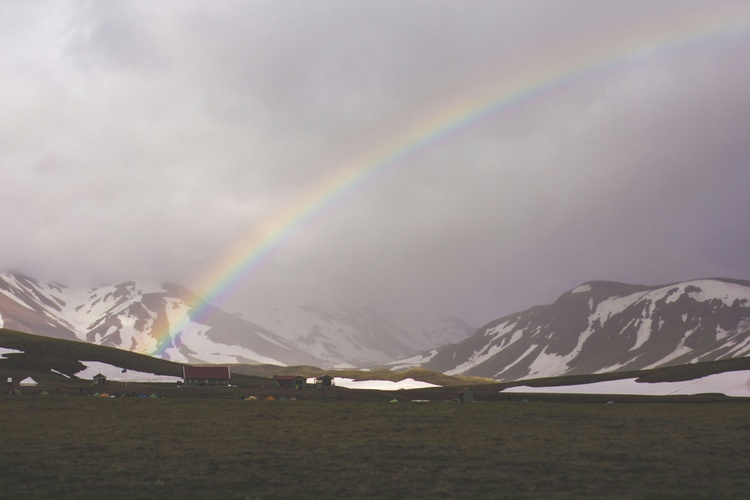
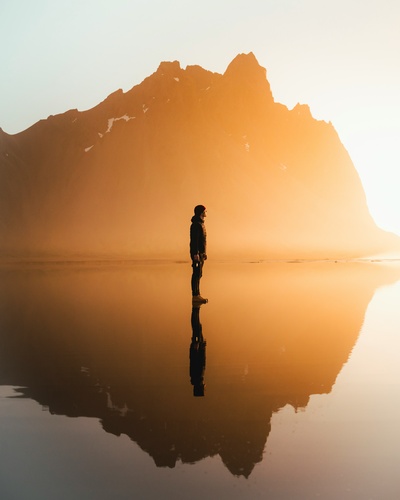
Iceland’s landscape anchors this journey as both setting and source. Its stark, otherworldly terrain informs the design of each realm, echoing the vivid cosmology preserved in the Eddas. As visitors move through the worlds, they encounter a haunting familiarity in their surroundings: Niflheim’s mist-shrouded pools, Muspellsheim’s radiant lava fields, Jötunheim’s giant-haunted birch forests, Vanaheim’s moss-laden warmth, Helheim’s endless drifting water, Niðavellir’s rough whispering rock caves and Ásgarð’s contrast of black sand and golden halls. Each realm is defined by its own scent, soundscape, texture, and temperature.
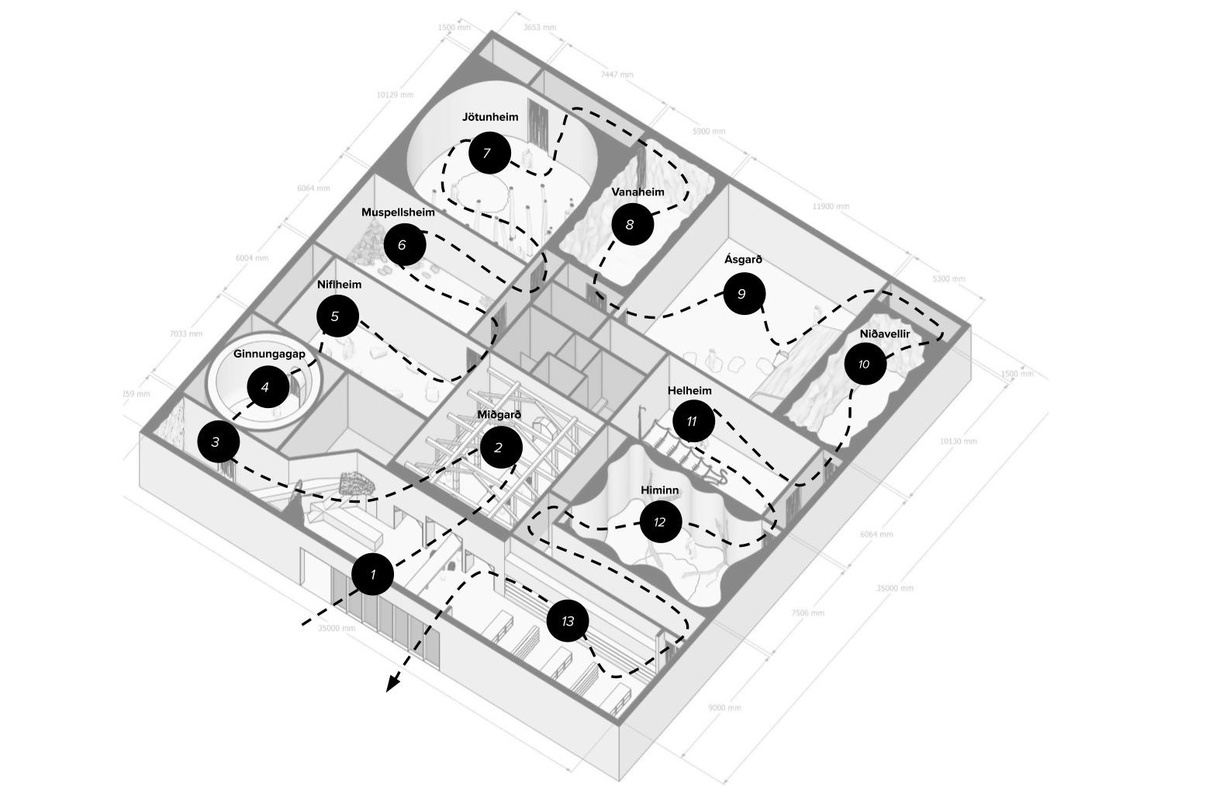
Journey through the realms of the Norse Mythology
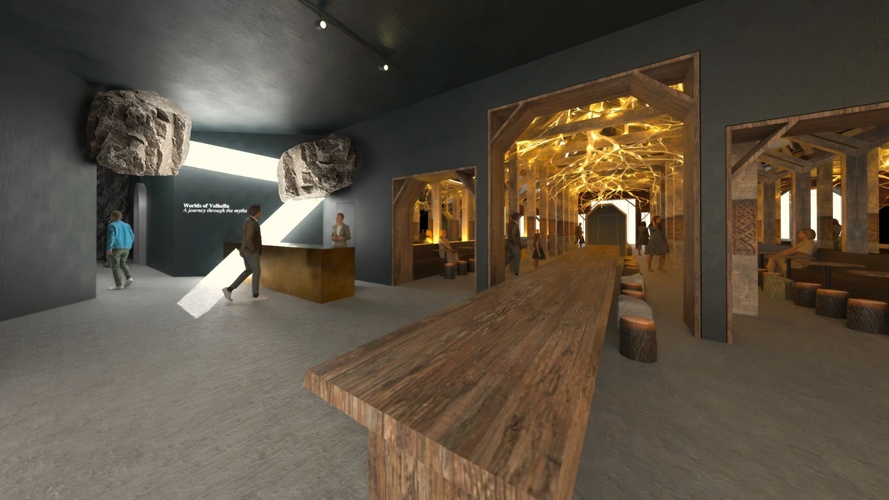
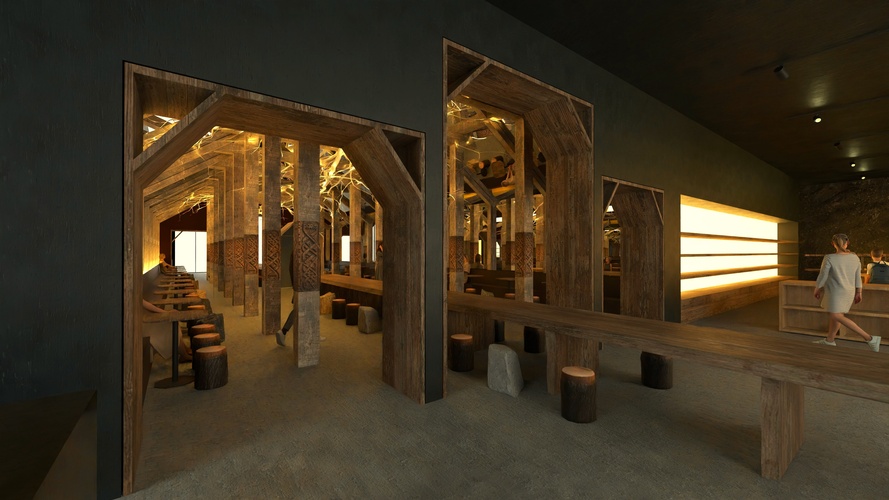
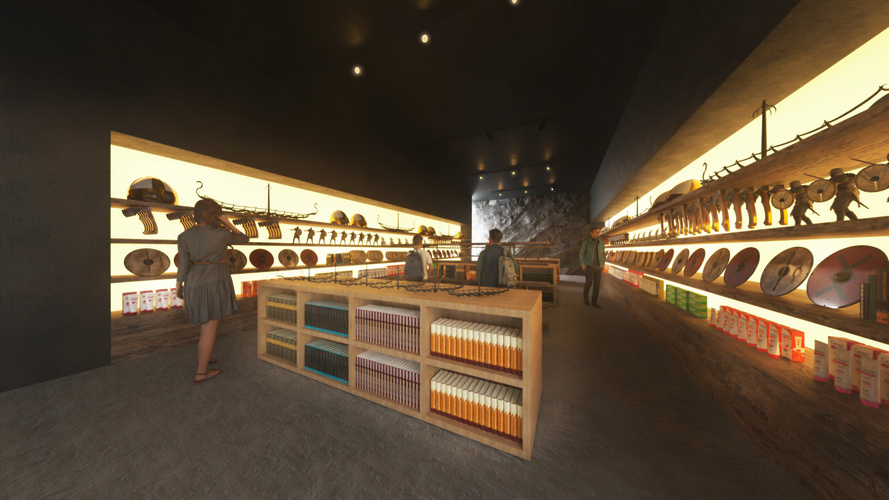
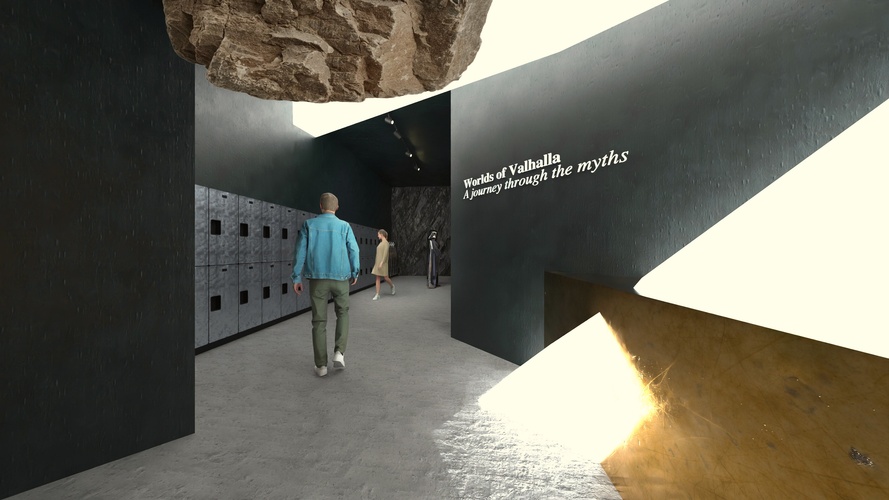
The Journey
The experience takes visitors through nine rooms representing the different realms of Norse Mythology. Each room plays a different role in the Norse Myths and has a distinct atmosphere. A narrative voice guides visitors through these spaces. The rhythm in the experience is created by varying the tension, interaction points, narrative focus, and time spent in each realm.
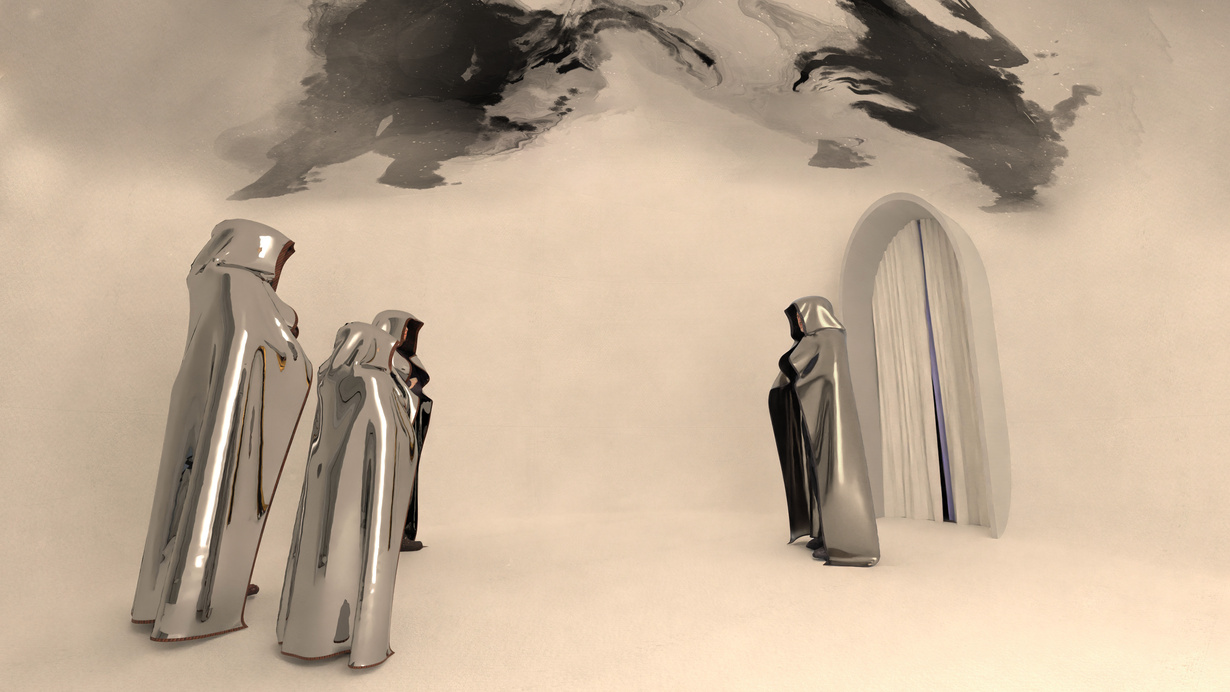
The journey begins in Ginnungagap, the primordial void. Ink-like projections on calfskin-textured walls trace the birth of the cosmos.
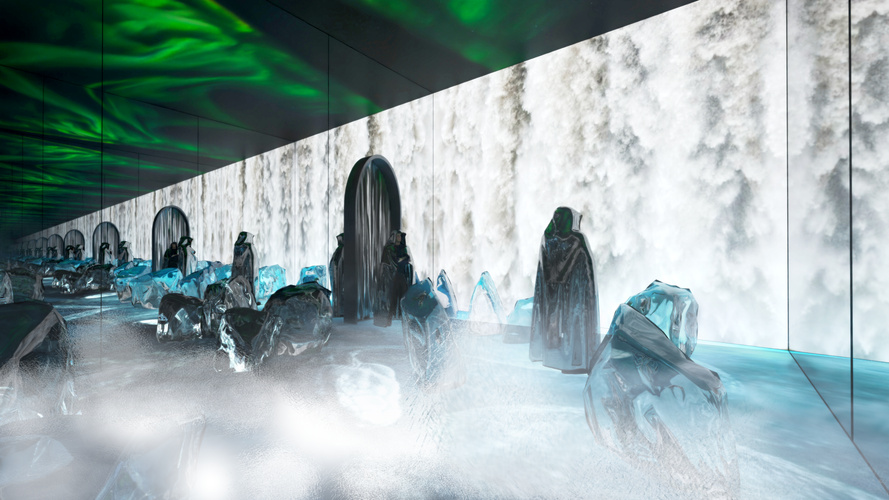

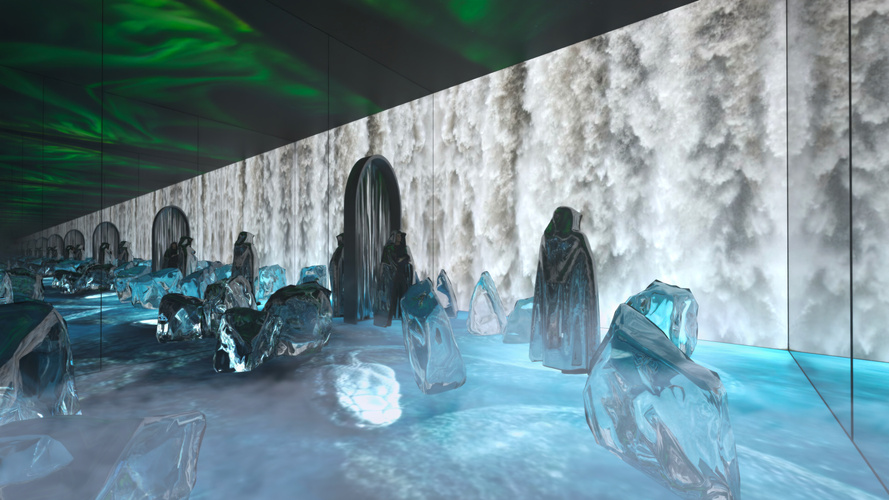
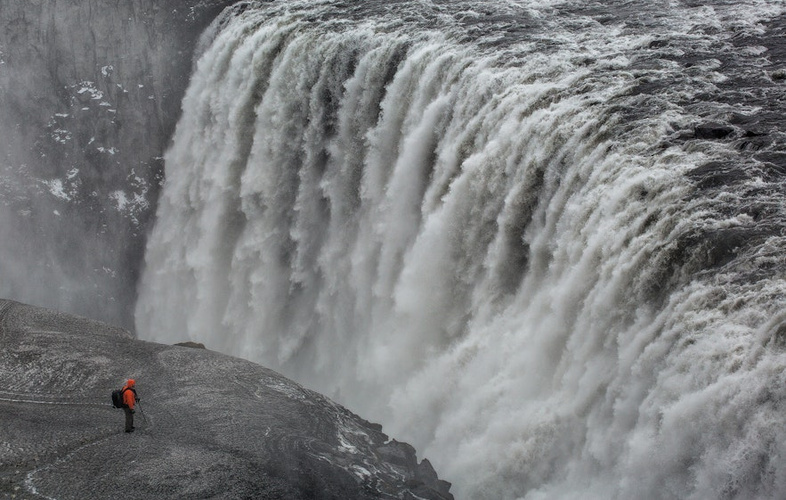
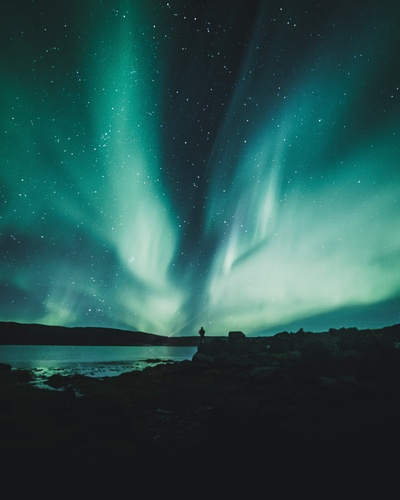
An ice-cold realm of serpent-filled pools, shrouded in poisonous fumes and eternal darkness. Visitors are startled by a serpent gliding past as icebergs crack beneath their touch.
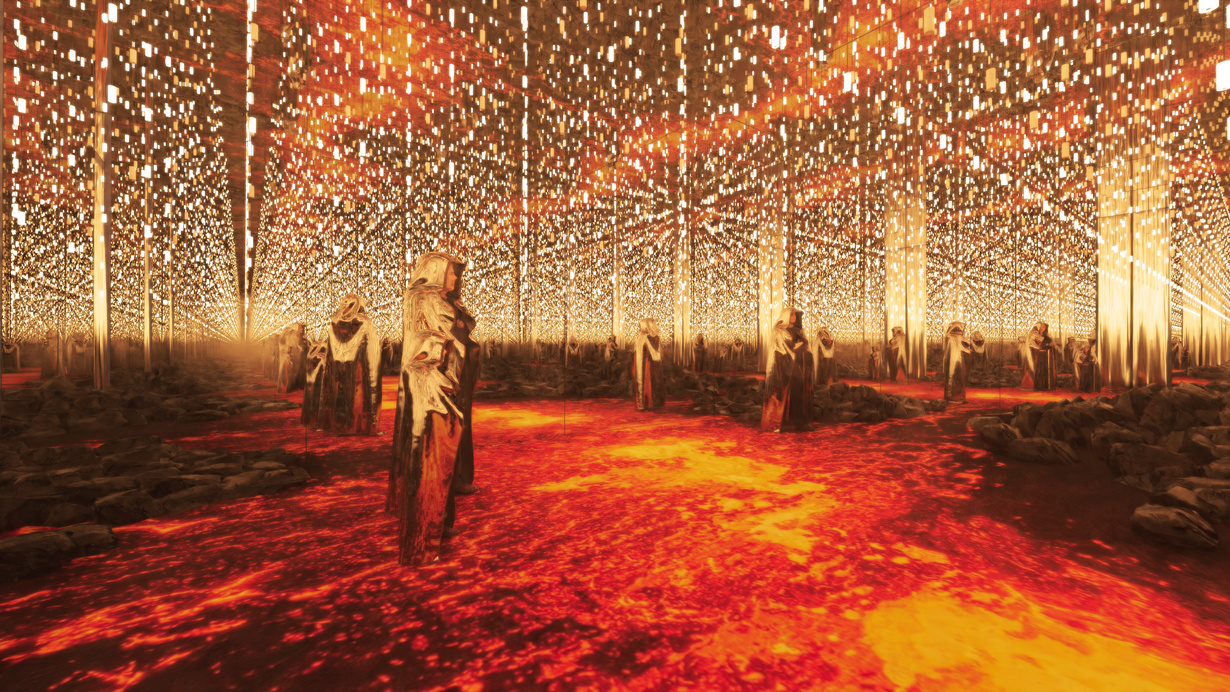
A realm of scorching flames and blinding light, where fire gave rise to the sun and stars. Stars appear as visitors move through the space.
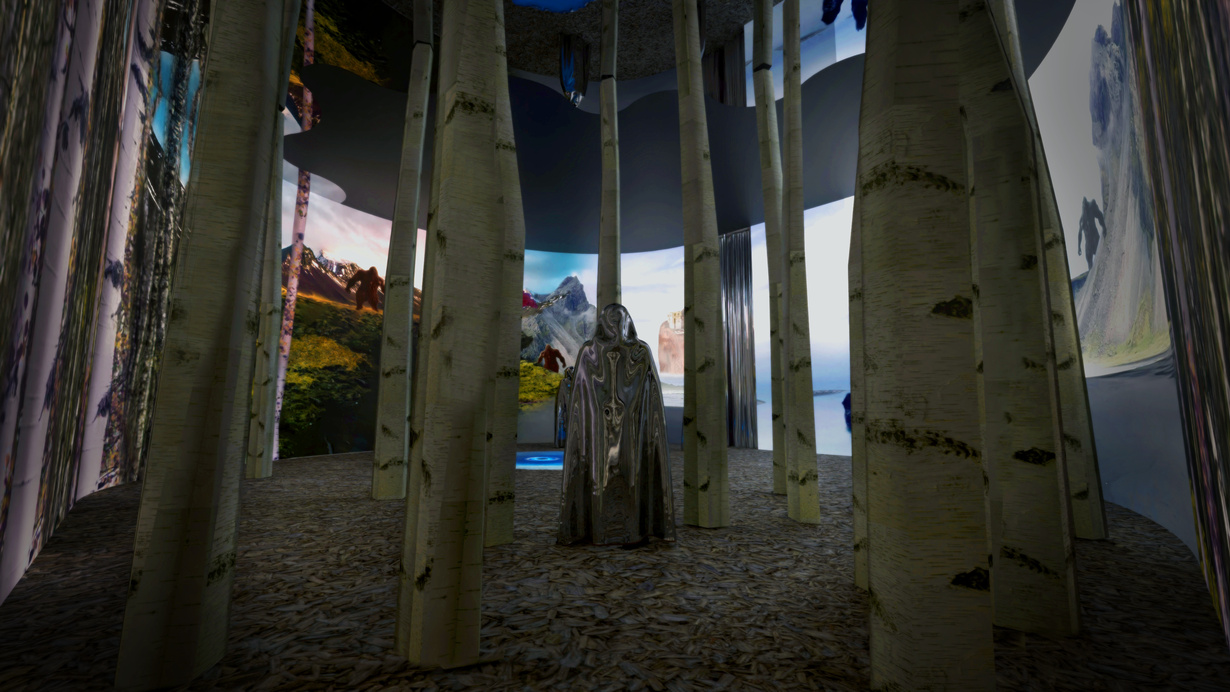
In this rugged forest of giants, visitors encounter towering figures like Mímir, whose well of wisdom holds Oðin’s eye. The ground trembles beneath their steps and illusions deceive the visitor’s senses.
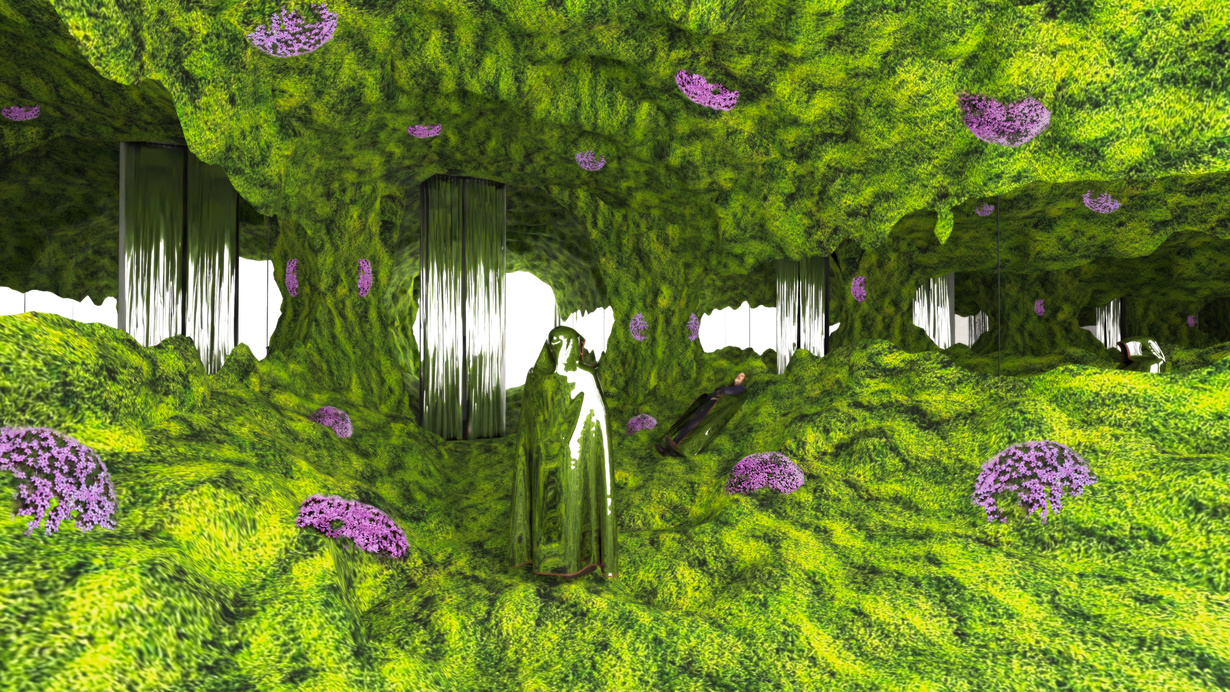
A lush world of fertility and wisdom invites visitors to lie in the moss and feel its beating heart.
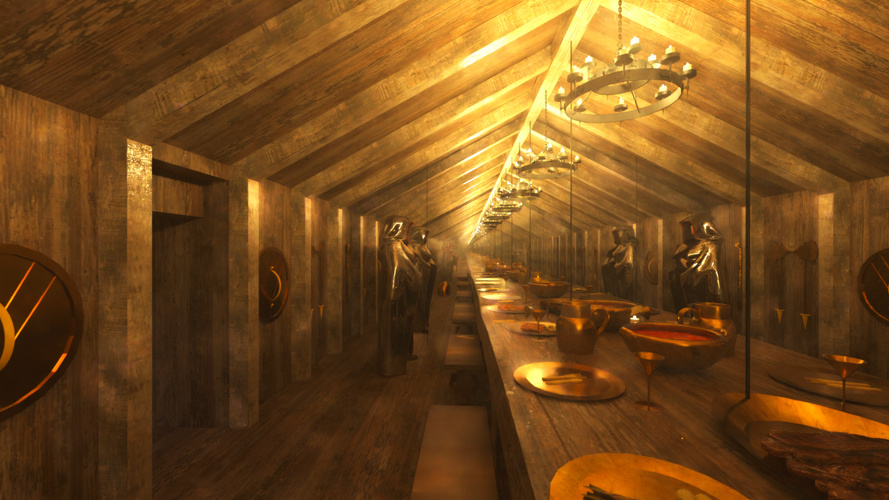
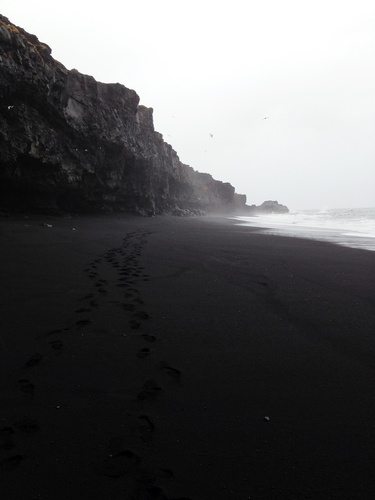
In the golden realm of the gods, everything gleams. Visitors may sit upon Oðin’s throne, listen to his raven advisors, or join the eternal feast of honored warriors.
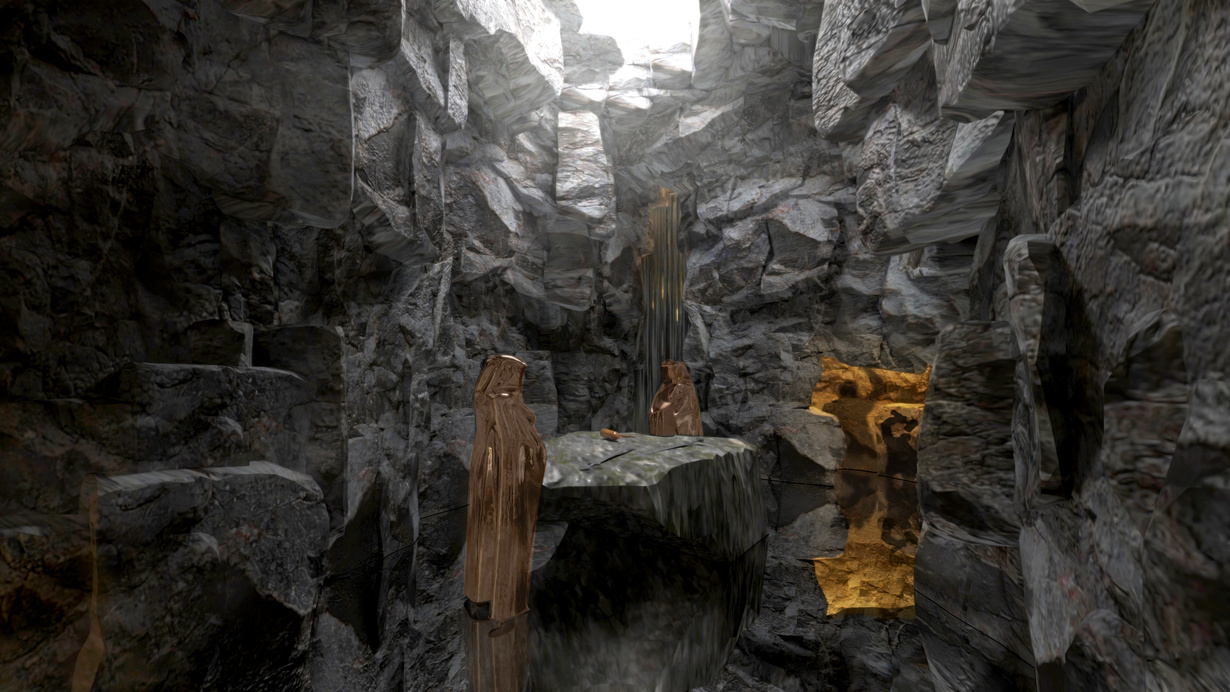
In the dark, cave-like earth, dwarfs forge powerful weapons and tools. Visitors are invited to step into their role.
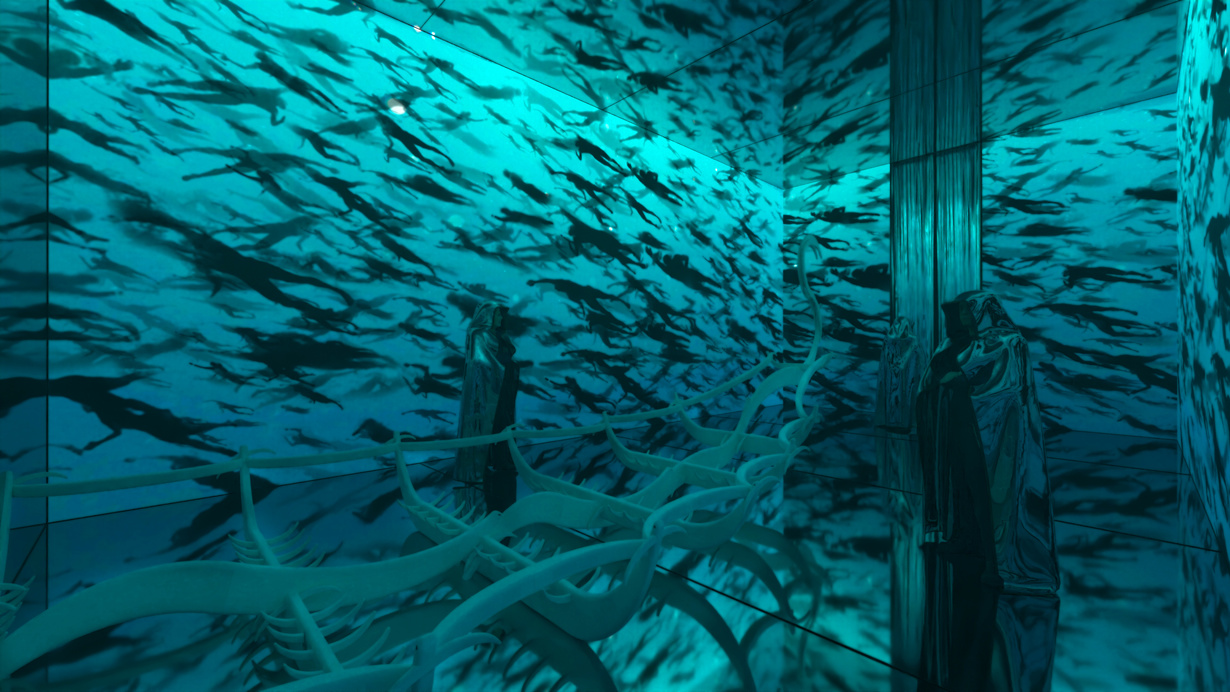
They who died less heroic deaths are sailed to Helheim. A vast and tranquil realm where souls drift through quiet waters softly responding to the visitor’s movements.
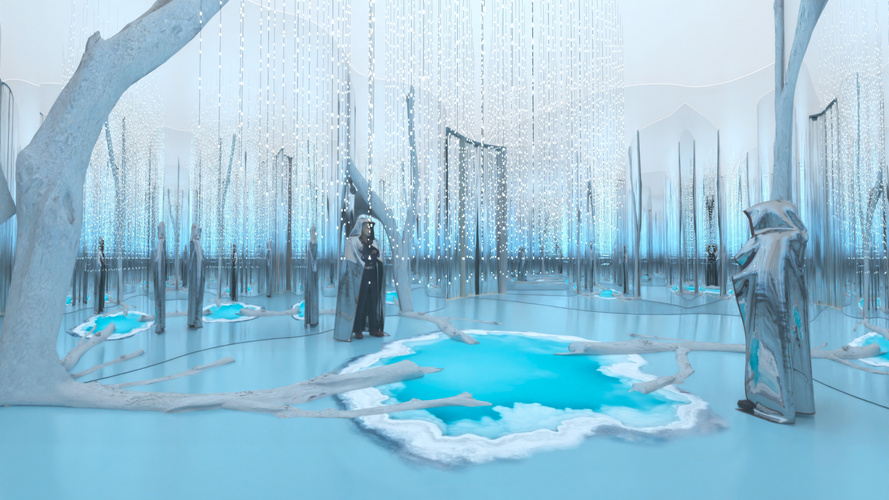

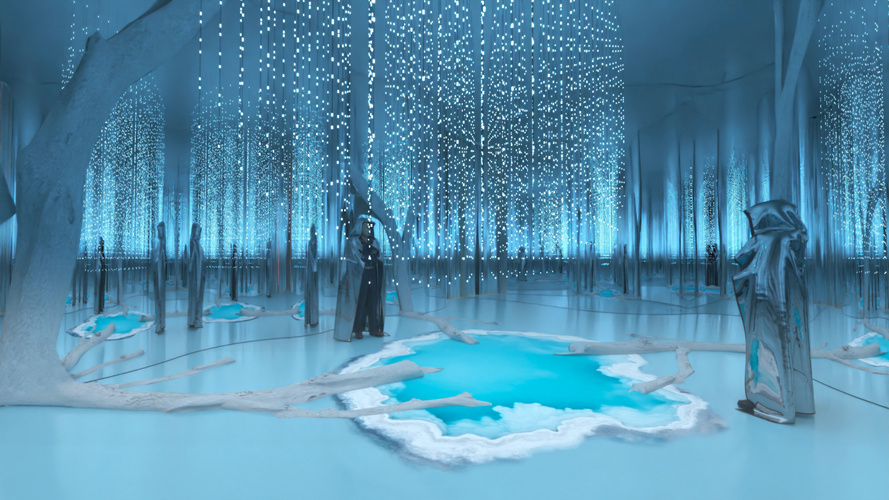
A celestial realm of silver and crystal light, where the well of fate resides. The luminous atmosphere responds to each visitor’s presence.
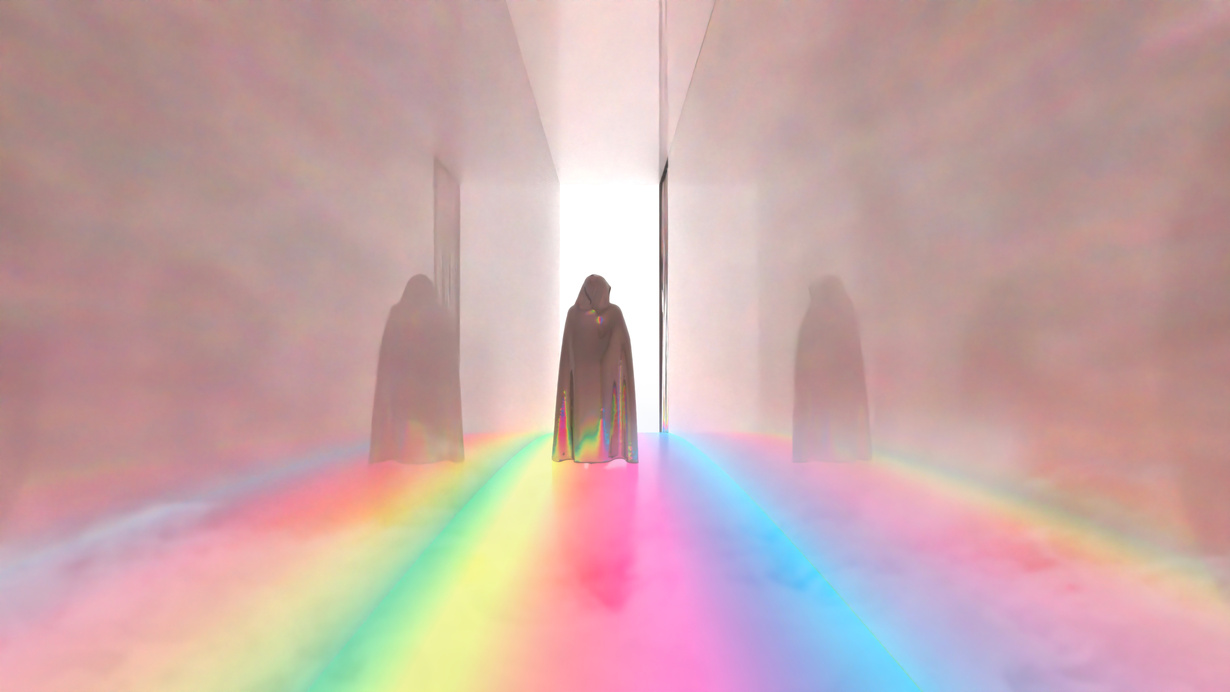
Visitors cross the rainbow bridge and return to Miðgarð, re-entering reality.
Subtle Encounters
Throughout the experience, visitors wear reflective cloaks that mirror the environments around them, making them part of the world rather than observers of it, and ensuring every photograph they take captures the atmosphere rather than disrupting it. Characters like the giants, Níðhöggr or the light elves are glimpsed rather than shown. A tail of a serpent at your feet, the tremor of giant footsteps through the floor, a presence felt rather than seen. The imagination is treated as the most powerful technology in the room.
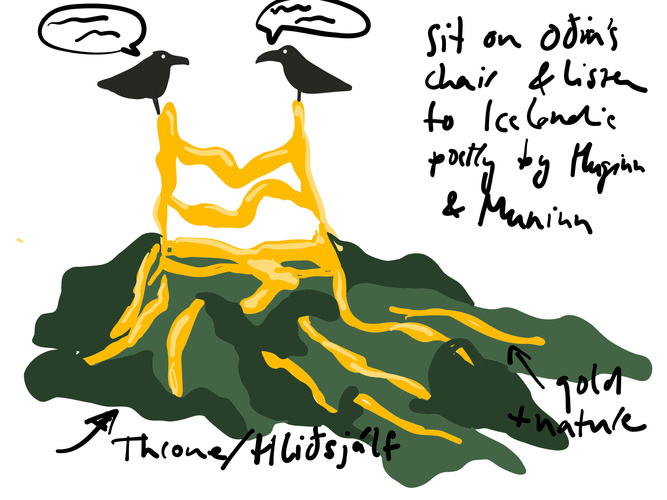
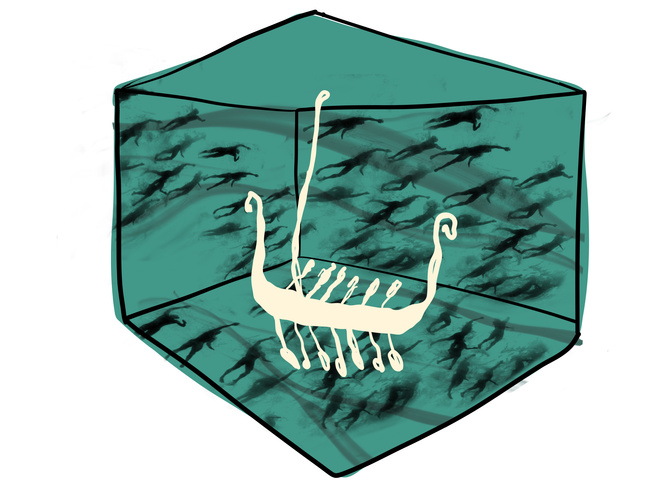
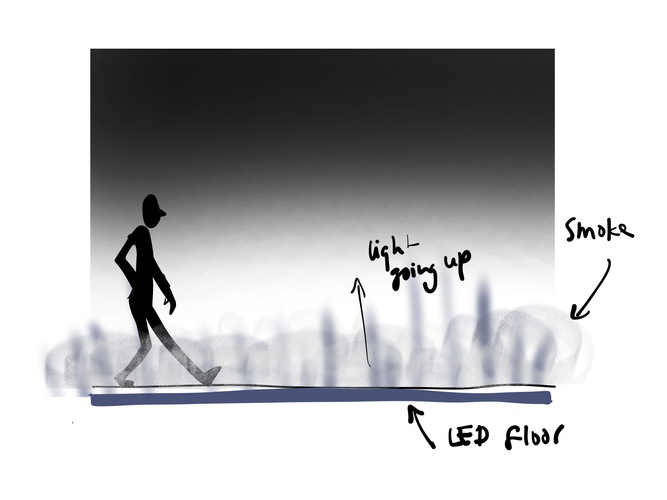
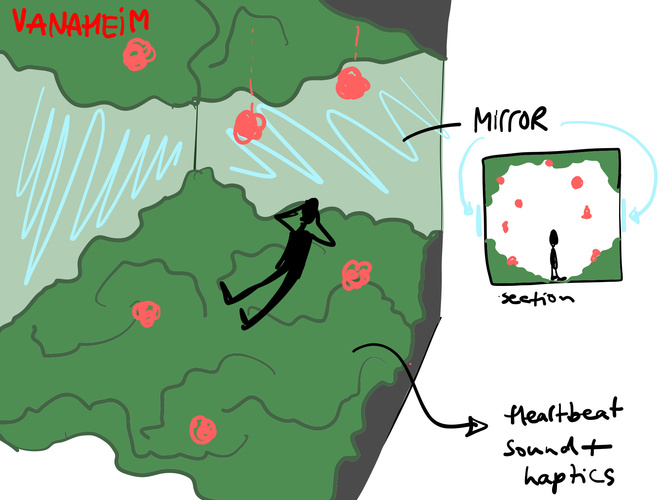
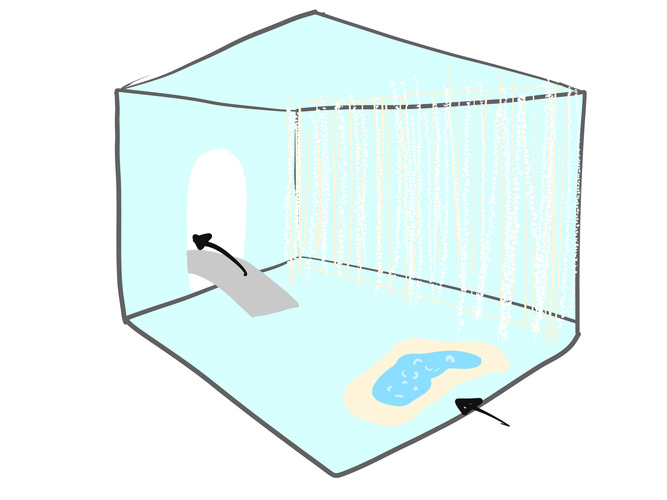
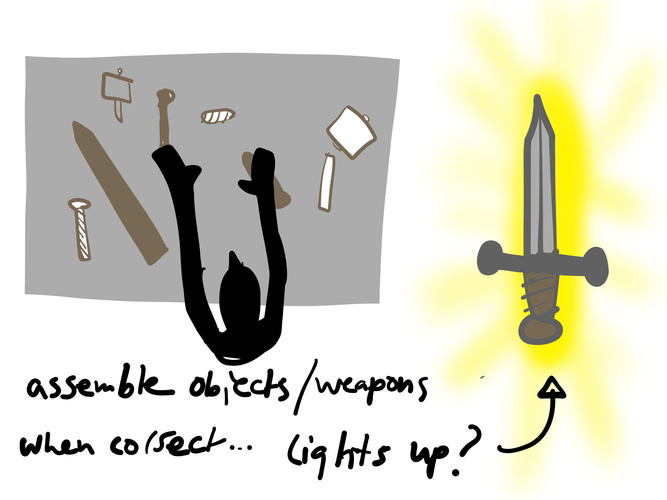
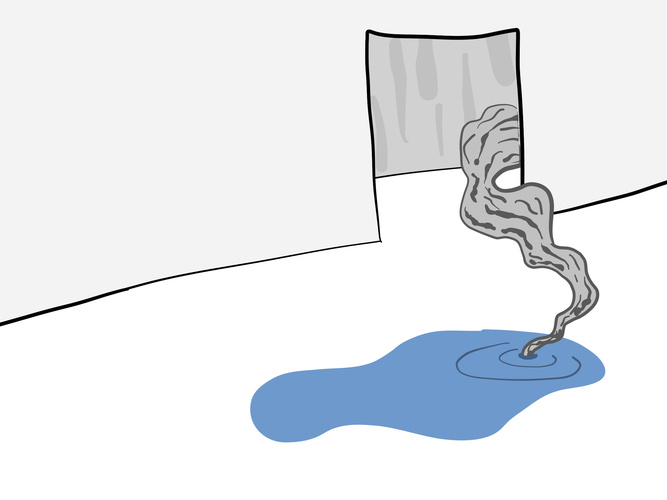
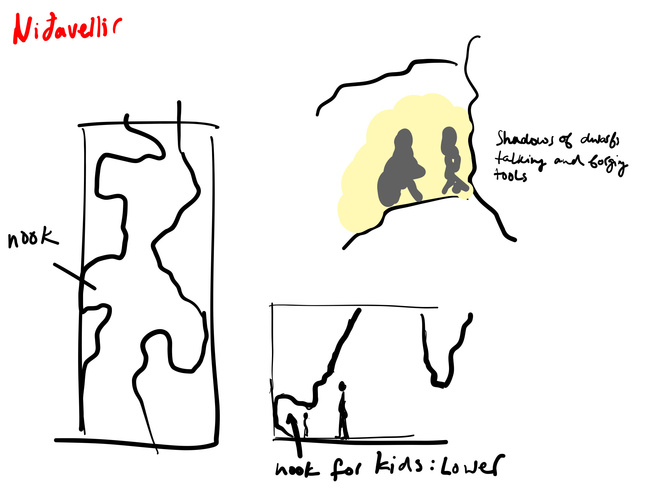
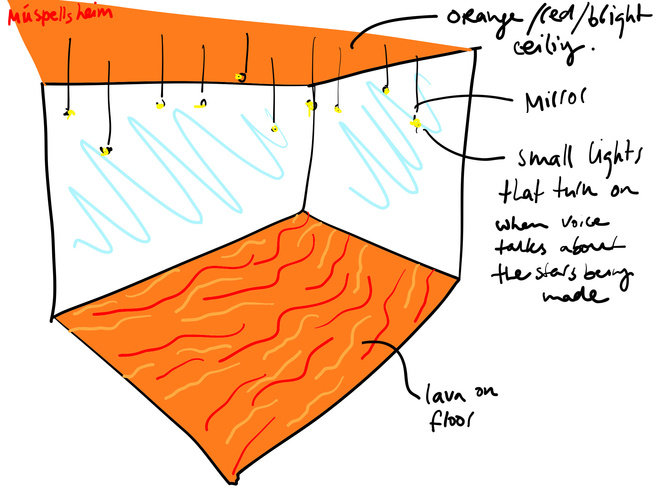
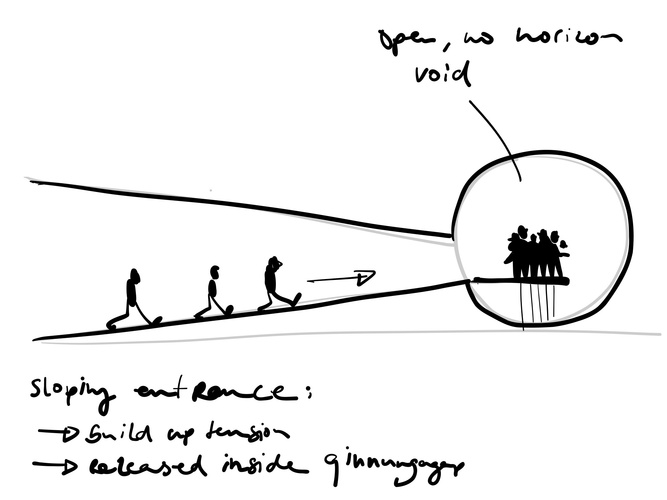
Sketches from the design process