Hofsstadir Archeological Site
Garðabær, Iceland
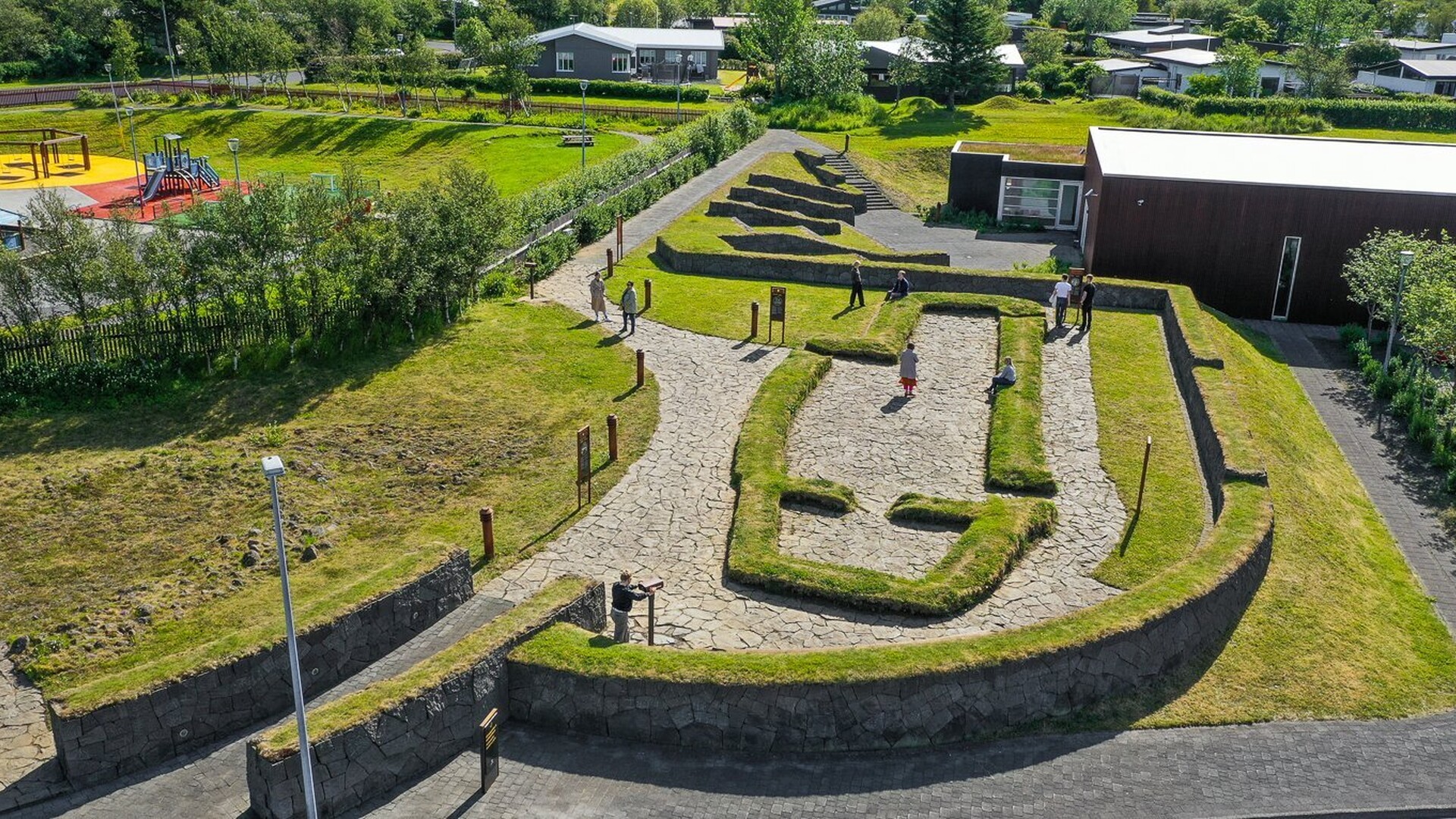
At Hofsstaðir in Garðabær, archaeological discoveries dating back to the early settlement of Iceland reveal the remains of one of the larger Viking Age longhouses found in the country. To make this history accessible in the landscape itself, Gagarin designed a renewed interpretive experience for the Hofsstaðir Heritage Park.
The project transforms the archaeological site into an open-air learning environment where visitors can explore the past directly in its original setting. Carefully integrated information panels and custom-designed multimedia viewing devices invite visitors to look across the site and visualize how the settlement may have appeared more than a thousand years ago.
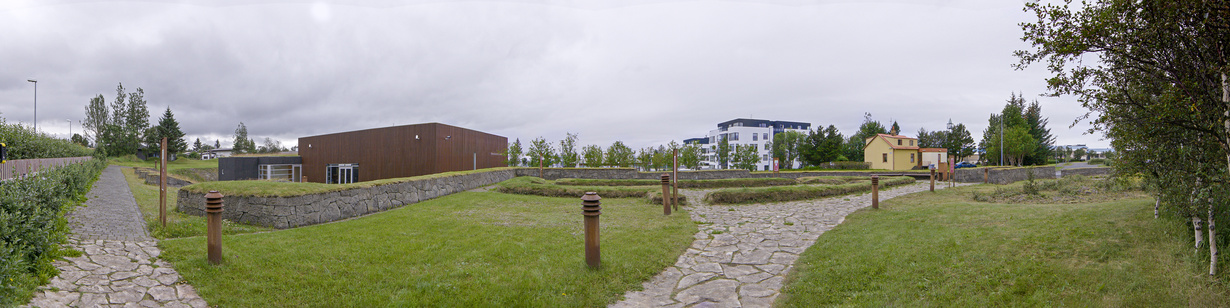
The site today.
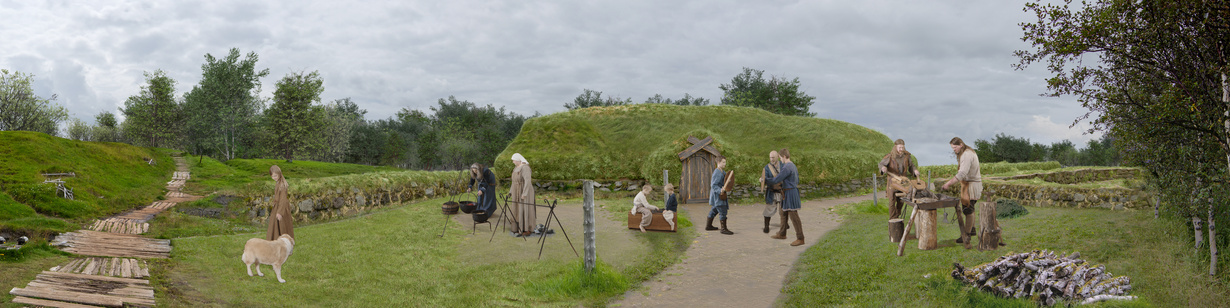
Interact to go to another reality (back to the future).
Through these viewing points, digital reconstructions and storytelling are layered onto the physical landscape, allowing visitors to connect the visible remains with the life that once unfolded there. The experience encourages exploration, curiosity, and a deeper understanding of early settlement in Iceland.
The interpretation is based on extensive archaeological research carried out at the site since the 1990s. The excavations uncovered the remains of a large longhouse dating to the late 9th century, approximately 30 meters long and 8 meters wide, built with turf and stone walls and centred around a long hearth. The scale of the structure suggests that a large household, possibly 20 to 30 people, once lived here.
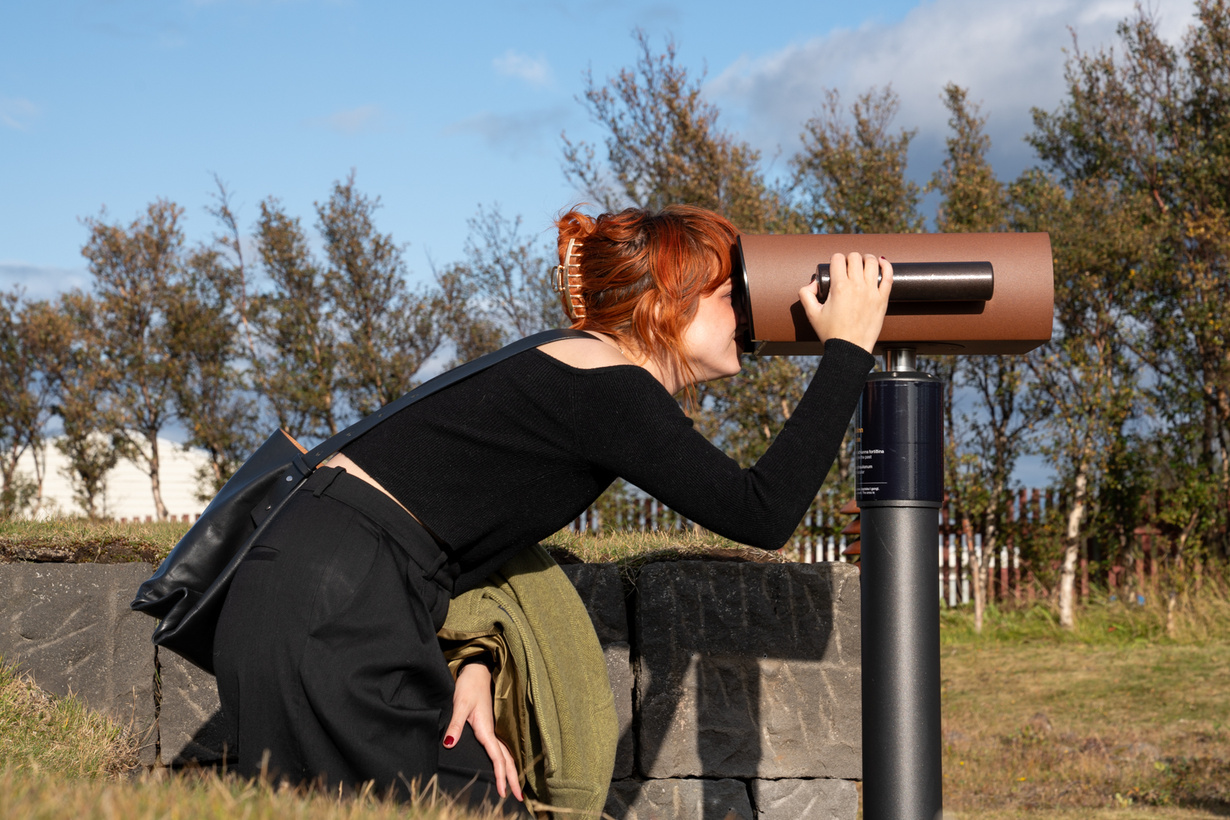
Gagarin installed three VR binoculars in the park to give visitors a sense of lost times, allowing them to peer back into history. There, they discover how the Settlement farm was constructed, what it looked like, and the main activities of the people living there.
Hofsstaðir was a large farm in ancient times, but no one knows who lived there because the town is not mentioned anywhere in the oldest sources www.afturtilhofsstada.is
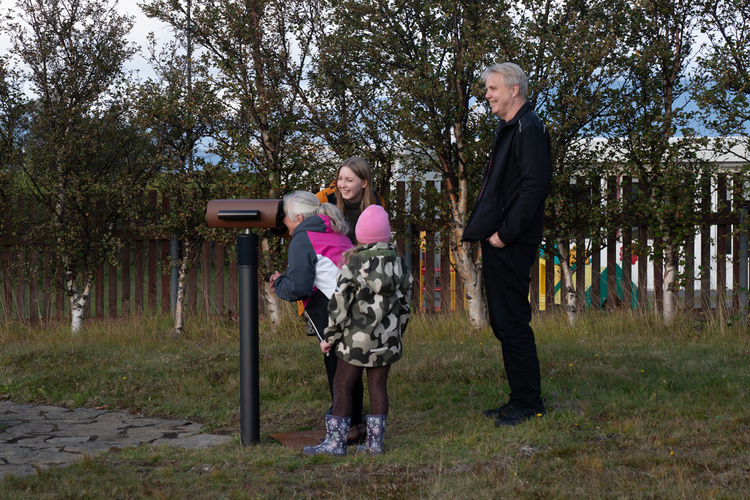
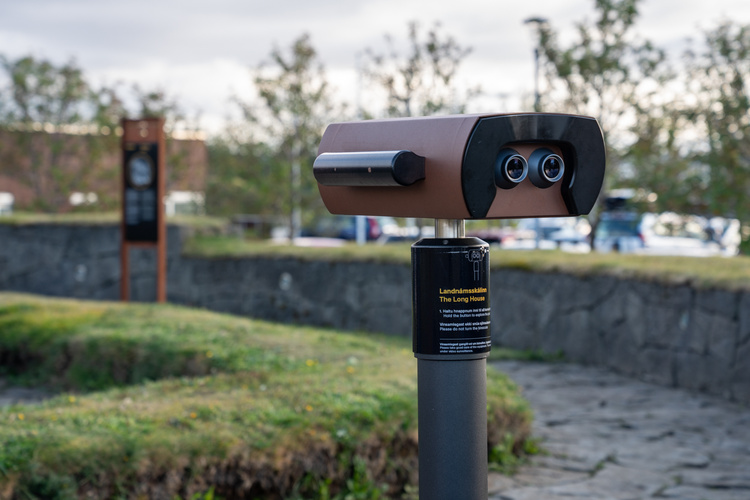
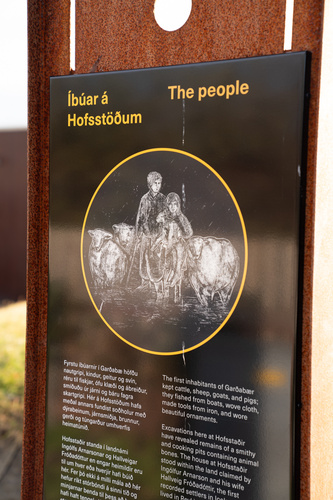
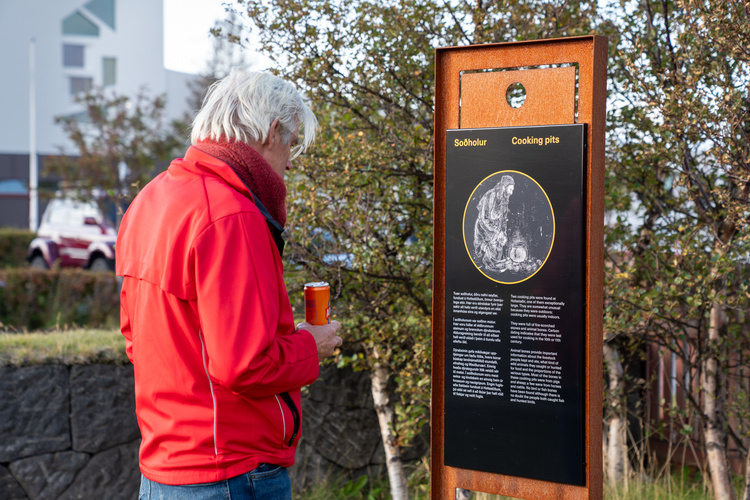
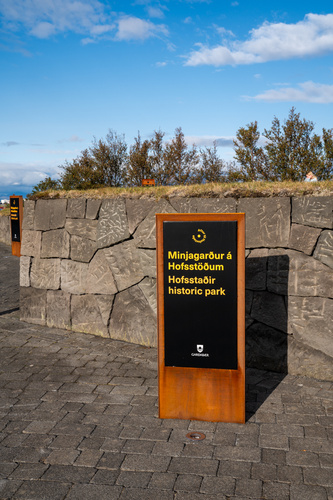
The new outdoor exhibition builds on earlier work by Gagarin for the site, including a Nordic award-winning multimedia exhibition from 2004.
Nearby, Gagarin also designed the interactive exhibition Back to Hofsstaðir, where visitors can explore the history of Garðabær from the settlement period to the present day. At the centre of the experience is a tactile installation inspired by a historic grinding stone discovered at the site. By rotating the stone, visitors “grind” their way through the timeline of local history, physically navigating the stories of the landscape and the people who lived there.
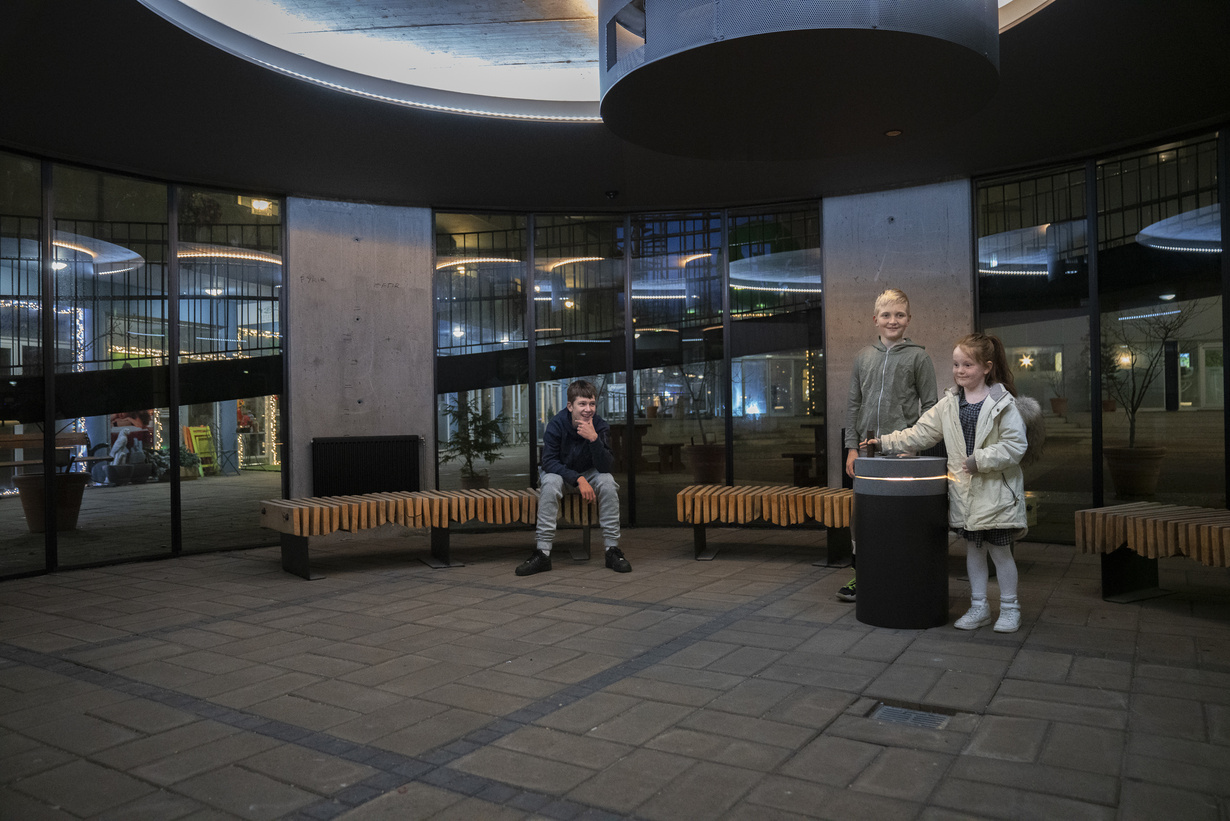
A grinding stone station, offers an innovative glimpse into the past.
Together, the landscape installation, physical interpretation, and digital storytelling create a layered visitor experience that reconnects the archaeological remains with the stories of the people who lived there more than a millennium ago.
By rotating the stone, visitors “grind” their way through the timeline of local history, physically navigating the stories of the landscape and the people who lived there.
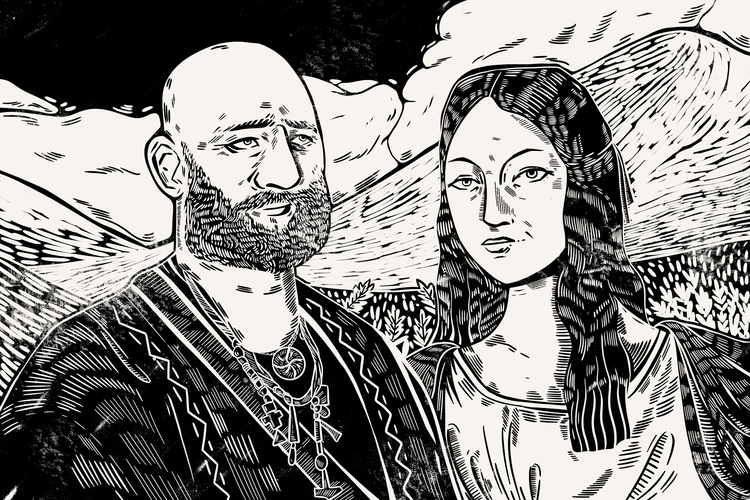
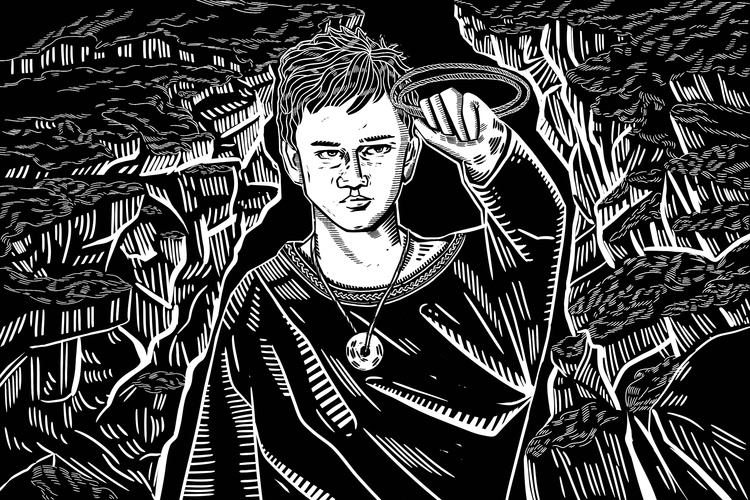
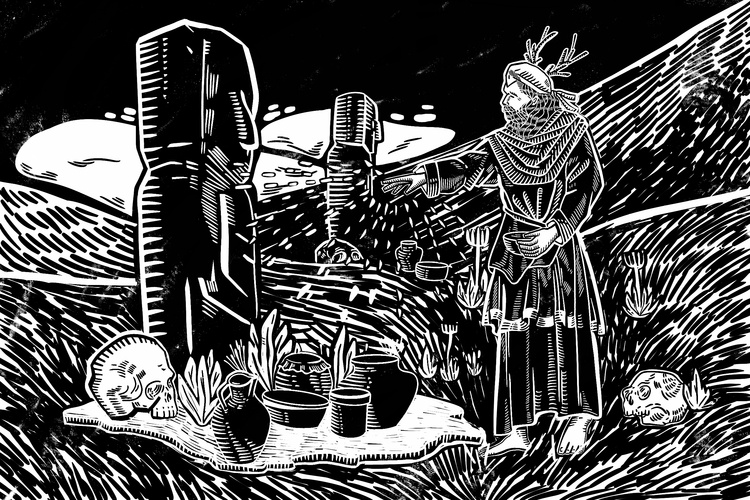
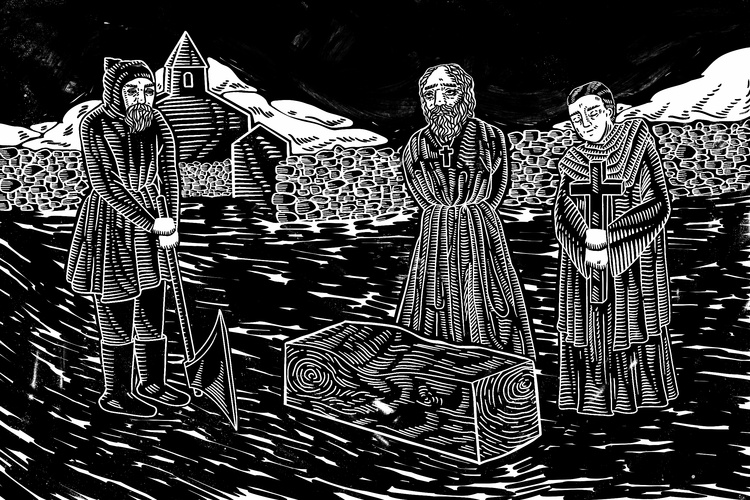
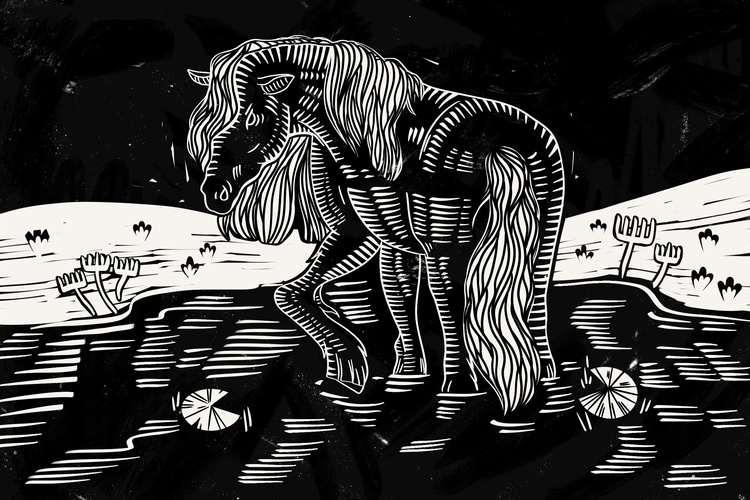
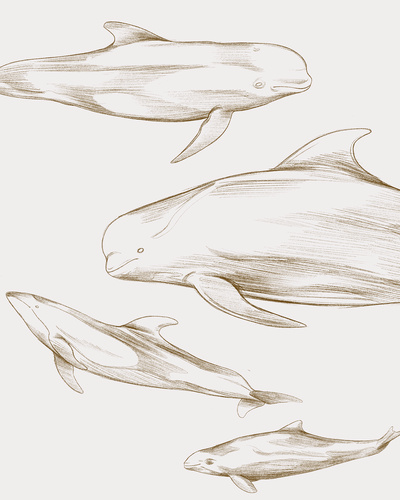
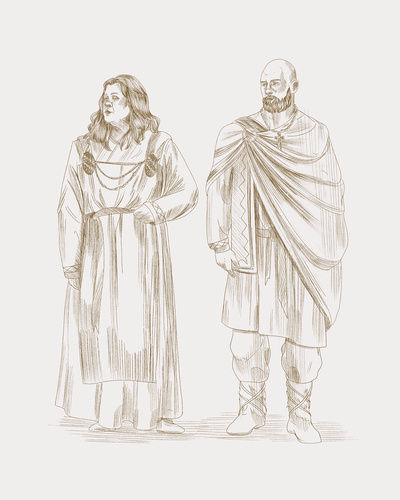
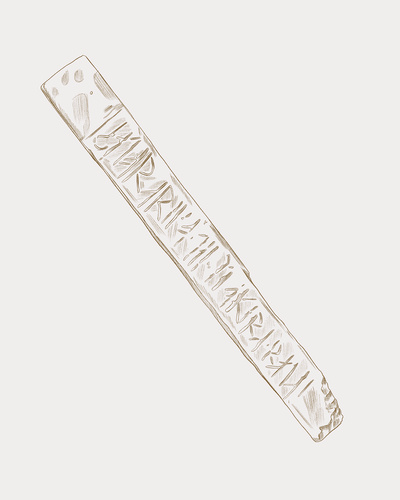
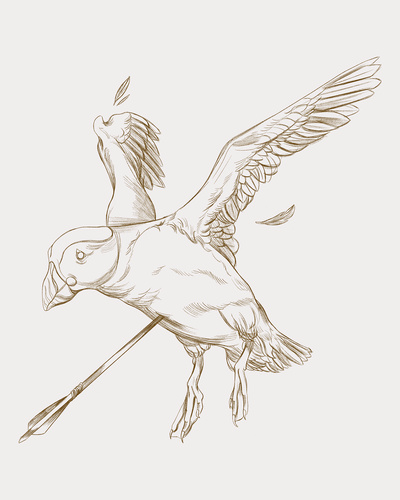
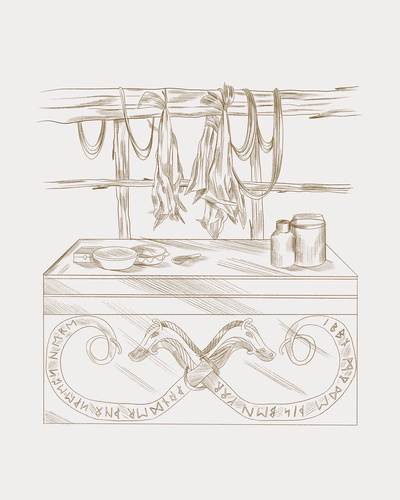
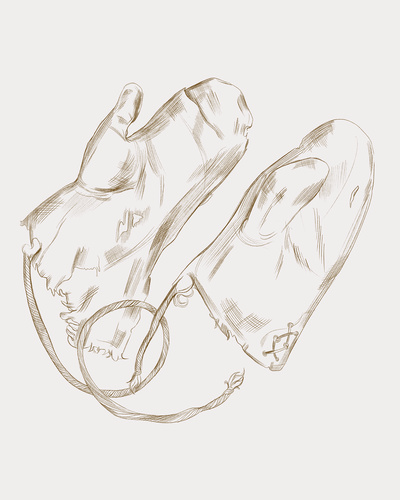
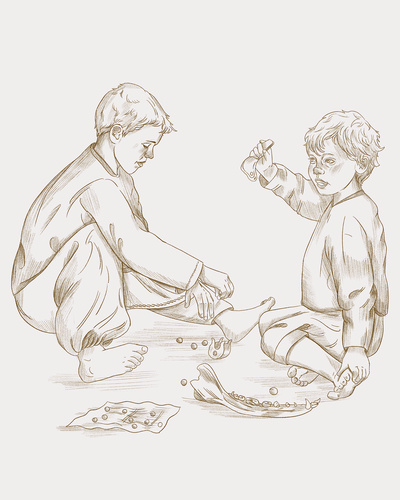
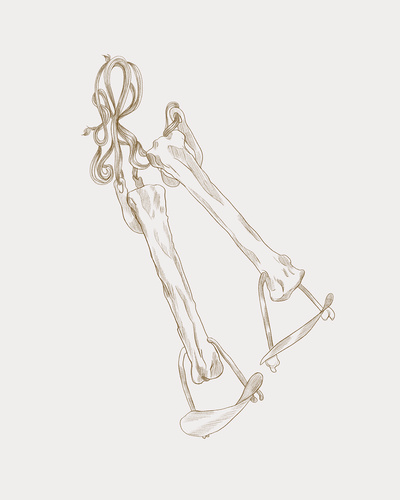
Illustrations by Gagarin.
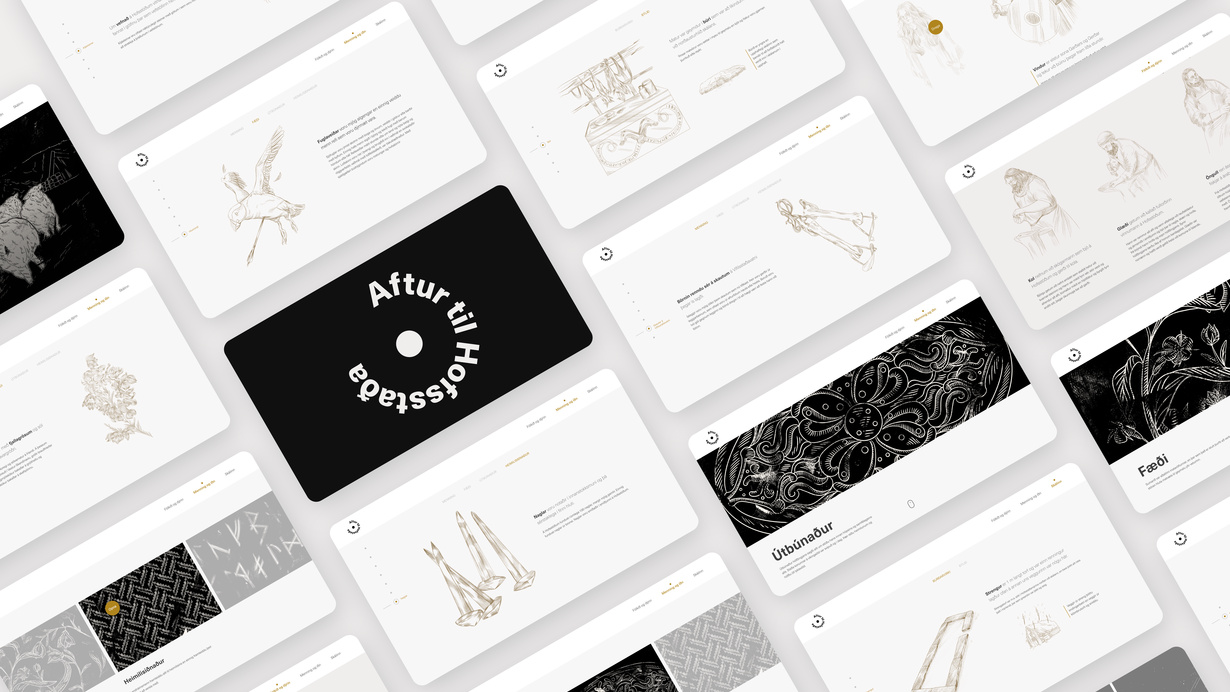
In addition to the exhibition, Gagarín designed a website about the history of the settlement longhouse, the building structure, the people who lived there and their culture. Gagarin made layered drawings that visually explain the building technique and the interior design while giving a glimpse into the people's daily lives.